
Art Creation and Autism
- myarteducation
- Jan 6
- 3 min read
These artworks are produced by the autistic children who are learning art at West California Academy of Art and Design (WCAAD).


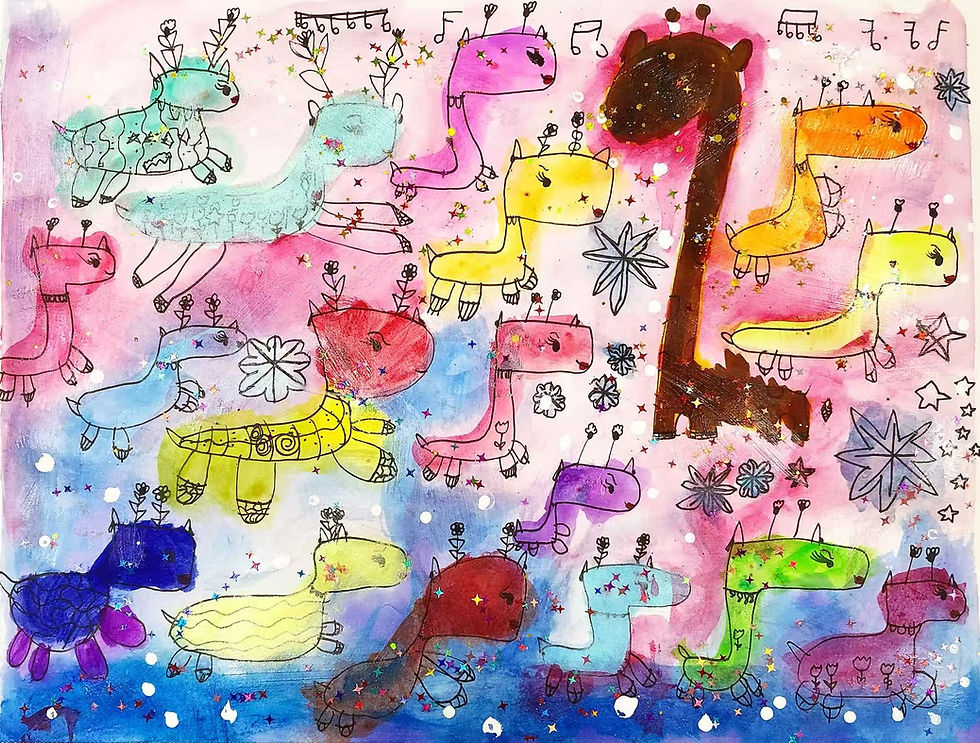

For children on the autism spectrum, art creation holds special significance. While verbal language may be limited, imagery becomes their language.


Some parents enroll their autistic children in art classes at the WCAAD because drawing is often one of their most beloved activities. Art serves not only as a means of expression but also as a bridge connecting them to society.


Don't these artworks completed by WCAAD autistic students carry the flair of master artists? These children are incredibly endearing and remarkably talented. They are "children of the stars," each inhabiting their own unique world, shining with brilliance.


WCAAD provides them with personalized, one-on-one art lessons, using artistic expression to support their joyful learning and living in a barrier-free environment.

Encouraging autistic children to learn art holds multifaceted significance. It is both an artistic initiation and a gentle yet effective form of healing and developmental support.

Many autistic children excel at visual processing, or "thinking in pictures." Drawing naturally leverages their strength, reducing reliance on language or abstract symbols.

Drawing offers a controllable creative space. The combination of lines, colors, and shapes provides predictability, which can alleviate anxiety related to uncertainty.

When expressing emotions or needs verbally is challenging, drawing becomes a vital alternative communication tool, helping others understand their inner worlds.

The process of drawing allows for the release of stress through color and brushstroke. It can also serve as a sensory-regulating activity, potentially reducing repetitive behaviors or emotional outbursts.

Drawing enhances hand-eye coordination, promotes sensory integration in the brain, and positively impacts daily life skills like writing.

Planning a composition and selecting colors can exercise decision-making skills. Sharing artwork may spark natural interaction, fostering social interest. Expressing abstract concepts through imagery promotes cognitive flexibility.

The sense of accomplishment gained from art creation builds a positive self-perception—an "I can create value" belief—which can counter feelings of inferiority stemming from social difficulties.

When the brush becomes their voice and colors become their emotional vocabulary, art transcends mere aesthetics. It becomes a gentle testament to a way of being. Supporting their creative expression is, at its core, affirming: "Your perspective is unique and valuable, and it deserves to be seen."

Some individuals on the spectrum demonstrate extraordinary talent in fields like art and design. Early cultivation may pave the way for future career development.

Teaching autistic children artistic creation is about empowering them to communicate with the world through a palette of colors. It allows them to share the richness and beauty of their inner worlds with society, fostering greater understanding and inspiring supportive action. Moreover, it helps them find confidence as they grow and acquire a potential skill for their future journey into the wider community.


Comments