
Children’s Creative Art: Drawing within a Drawing
- myarteducation
- Feb 3
- 3 min read


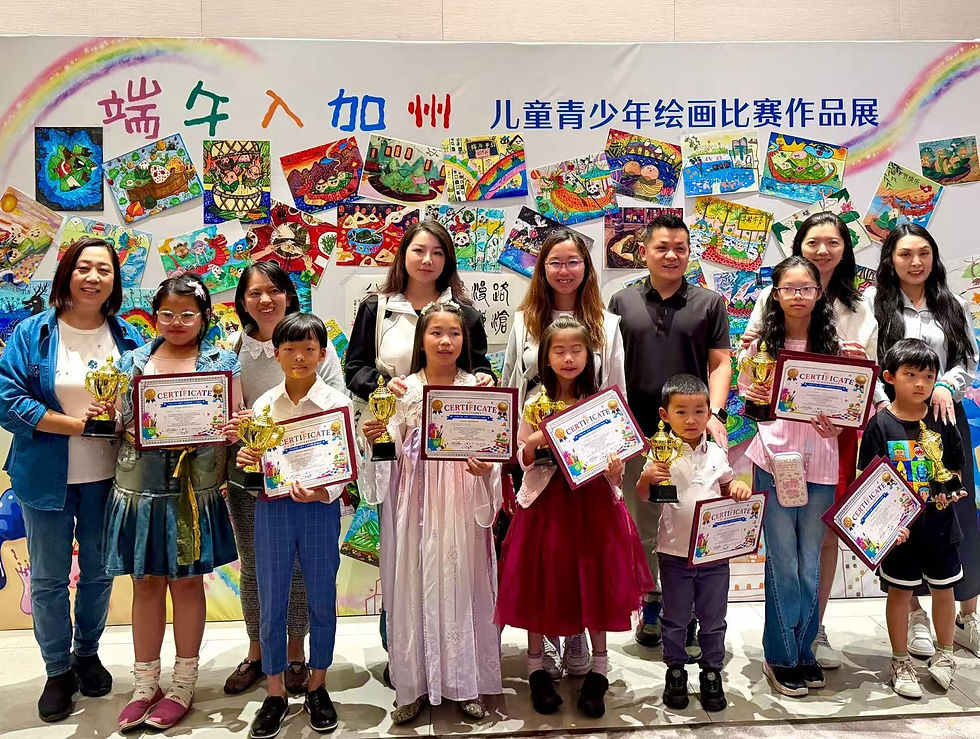
These "Drawing within a Drawing" themed artworks were produced by WCAAD students at the children's creative art classes.


The term mise-en-abyme is a French phrase that literally means "placed into the abyss." It is a critical and artistic concept used to describe a work of art, literature, or media that contains within itself a smaller copy of itself, creating a recursive, self-reflexive loop.
However, in this art project, the children infused their own perceptions, creating works based on what they believe and know. The final pieces resemble a Drawing within a Drawing composition, presenting immersive scenes from a child's perspective, rich with contemplative and philosophical undertones.

"Drawing within a Drawing" is not merely a compositional technique but an elevation of cognition and expression. The core of this form lies in the "juxtaposition and nesting of the creative process."

Some works feature mirror-style depictions: the young artist in the drawing is depicting the very scene we see or even themselves. For example, a child sits by a window drawing, and the content on the canvas is "the child sitting by the window drawing." This creates a fascinating, self-referential loop.

Some works fall under content extension: what the young artist draws on the paper extends or imagines beyond the current real-world scene. For instance, a child draws the scenery outside the window, but the painted landscape is more vibrant than reality or includes fantastical elements. Here, the Drawing within a Drawing becomes a "window to the inner world."

There are also homages to art masters: children imitate or imagine themselves as famous artists painting those iconic works. This serves as both an introduction to art history and a form of cross-temporal role-playing.

This theme places higher demands on composition, aiming to clearly distinguish and connect the two layers of "reality" and "the painting."
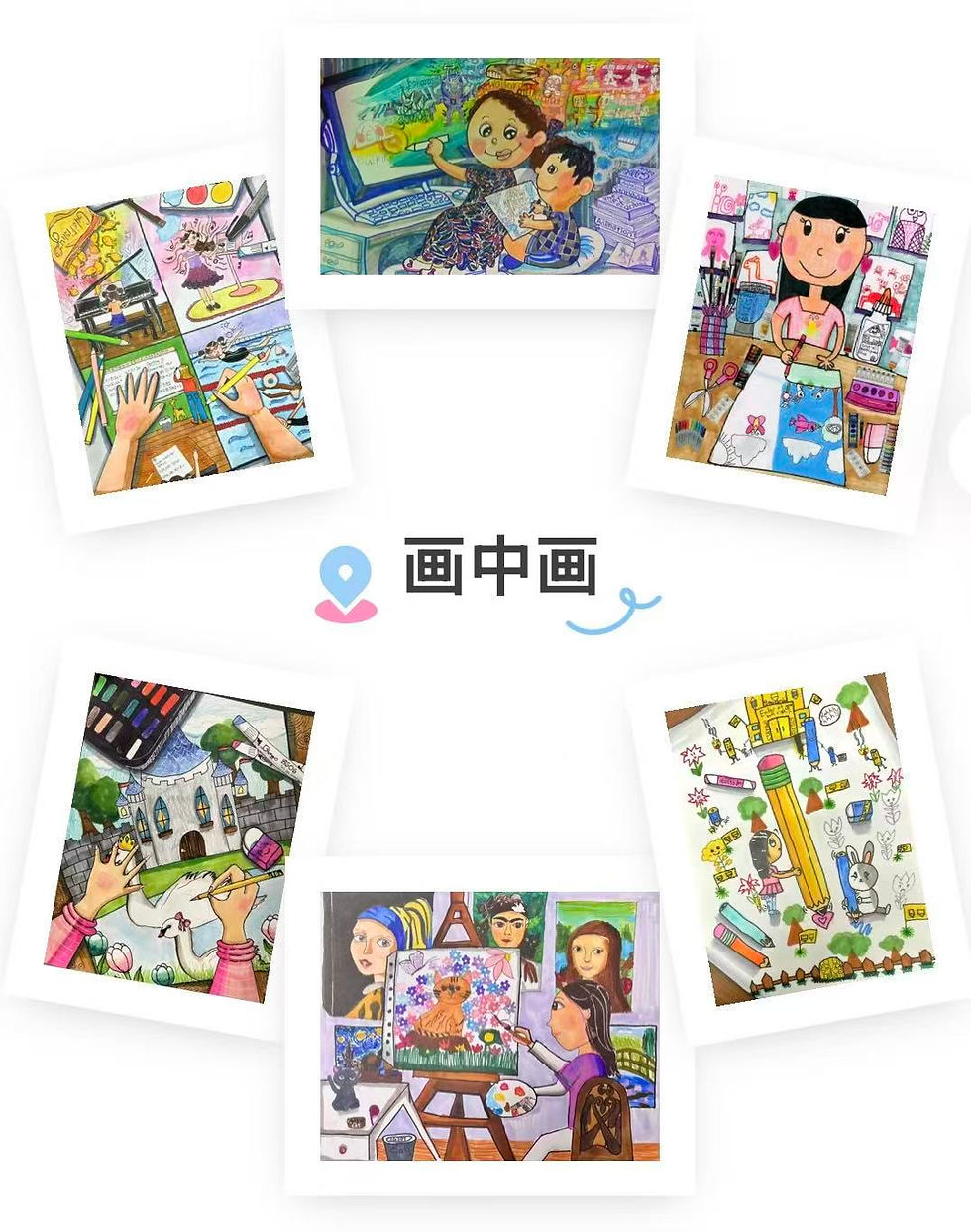
One approach is the frame segmentation method: using easels, the edges of canvas, windows, or doorways as explicit "frames within frames" to naturally divide the image into the "creative subject area" and the "artwork content area." This is the most direct and effective way to instantly establish a sense of depth.

Another approach involves perspective guidance: the viewer’s perspective is often an "overhead view," allowing a clear view of both the young artist and the content on their drawing paper.

This "Drawing within a Drawing" composition creates visual interest and philosophical reflection, with significance that transcends technical skill, highlighting the core value of this compositional approach in children's art education.

When a child depicts "themselves painting," it is a profound metacognitive process. They transition from being "executors" to "observers," beginning to ponder questions like, "Who am I?" "What am I doing?" and "How do I see the world?" The Drawing within a Drawing becomes a mirror, reflecting their self-image in the act of creation.

It moves beyond the scope of "what to paint" and enters the higher level of "painting the act of painting itself." This marks the child's growing conscious awareness of the act of "artistic creation," proudly making it the subject of their expression—a celebration of creativity.

It teaches children to manage two interrelated narrative spaces within a single plane: the real space and the imagined space. This greatly enhances their spatial thinking, organizational skills, and storytelling abilities.

The image naturally raises a question: Which is "real"? The objective reality seen by the eyes or the subjective expression rendered by the brush? This guides children to understand that art is not mere imitation but a re-creation blending subjectivity and objectivity, encouraging them to boldly express their personal perspectives.

The content of the Drawing within a Drawing often reflects what the child most desires to express. A child drawing a vast starry sky uses his/her artwork as wings to chase his/her dreams. This provides an excellent outlet for emotional expression and idealistic aspirations.

In homages to art masters, children engage in dialogue with the great souls of art history through role-playing. This is not only a technical exercise but also plants the seed of "being part of the artistic legacy" in their hearts.

In children's art, the "Drawing within a Drawing" composition is far more than a novel visual trick. It is a philosophical game, a ritual of self-discovery, and an initiation into the question of "what is real and what is creation."

It encourages children to move from unconscious scribbling to conscious expression, from depicting the external world to reflecting on their inner selves and the creative process itself.

When a painting not only presents the result but also encompasses the act, the thought, and the young creator behind it, the work gains unprecedented vitality and depth.


Comments