
Draw Your Own “Starry Night”!
- myarteducation
- Mar 10
- 3 min read
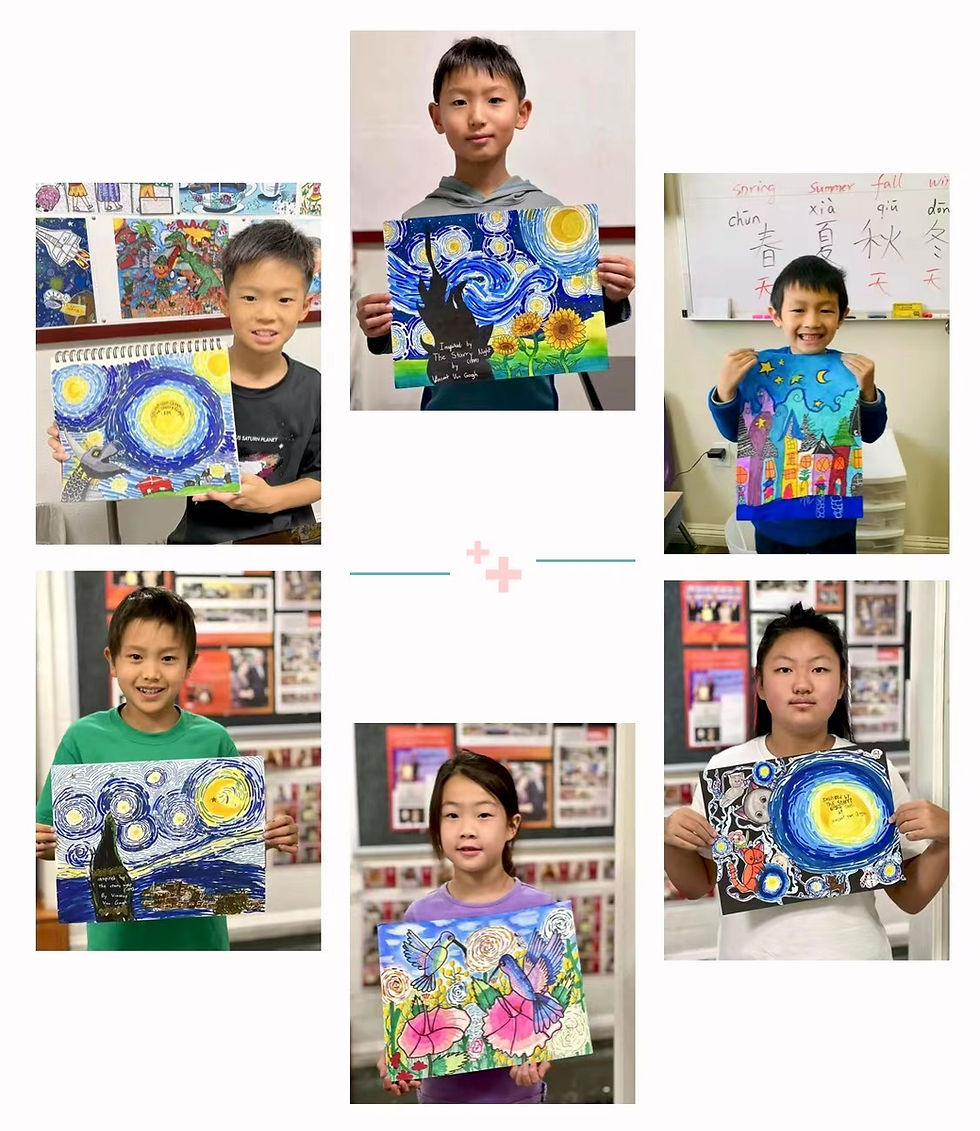
These artworks, inspired by Vincent van Gogh's The Starry Night, were created by students aged 6-9 at the WCAAD art appreciation class.


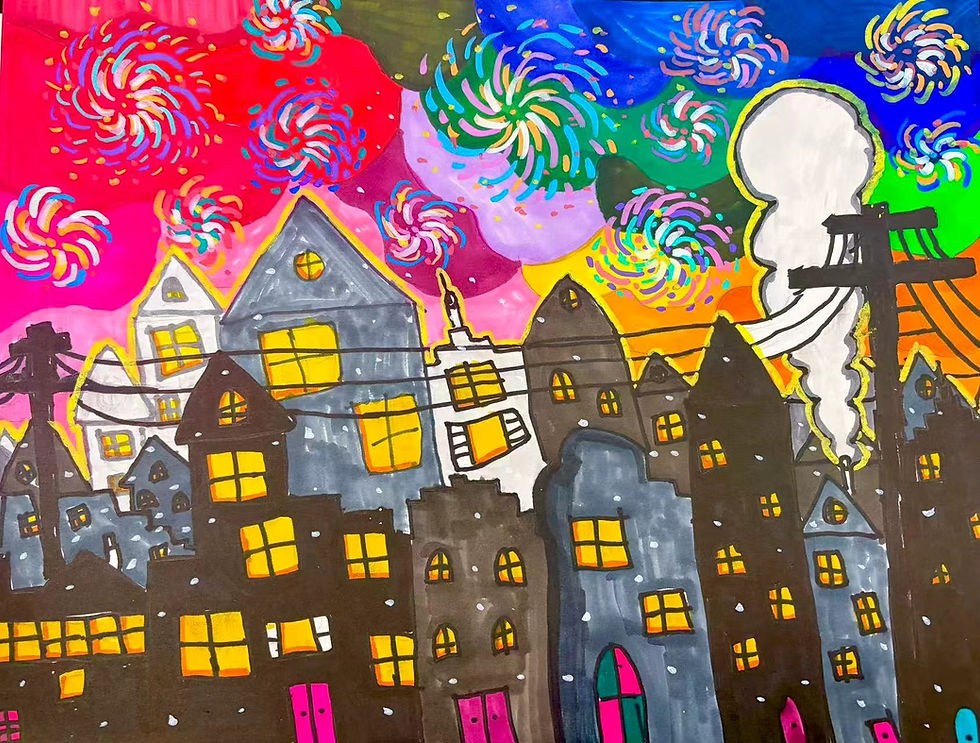

This is an Art Appreciation lesson where students learn about well-known artists and artworks, and create their own drawings inspired by them.

Created by van Gogh in 1889, The Starry Night emerged during a period of intense emotional instability yet pinnacle artistic creativity for the artist. Using his signature bold, and swirling short brushstrokes, van Gogh depicted a night sky bursting with life. Clouds and celestial bodies are no longer static; they flow through the cosmos like immense vortices, charged with powerful movement and energy. The deep Prussian blue and ultramarine night sky stands in stark contrast to the brilliant white and lemon yellow of the stars. The moon and stars are encircled by immense halos, as if they are genuinely radiating and burning. In contrast to the turbulent sky, the small village at the bottom of the painting appears serene and peaceful. The dark cypress tree on the left side rises like a flame from the earth towards the sky, often interpreted as a symbol connecting "life and death."

Van Gogh's celestial scene is a direct projection of his inner world. Through his wild brushwork and vibrant colors, he infused the night sky with his personal emotions—loneliness, agitation, awe, and yearning for the cosmos—endowing it with an unprecedented vitality and emotional power.

The teacher's guidance plays a pivotal role during the appreciation process. Selecting appropriate artworks for children requires professional insight and knowledge. This systematic exposure helps structure children's perceptual experiences, gradually cultivating their aesthetic perception.
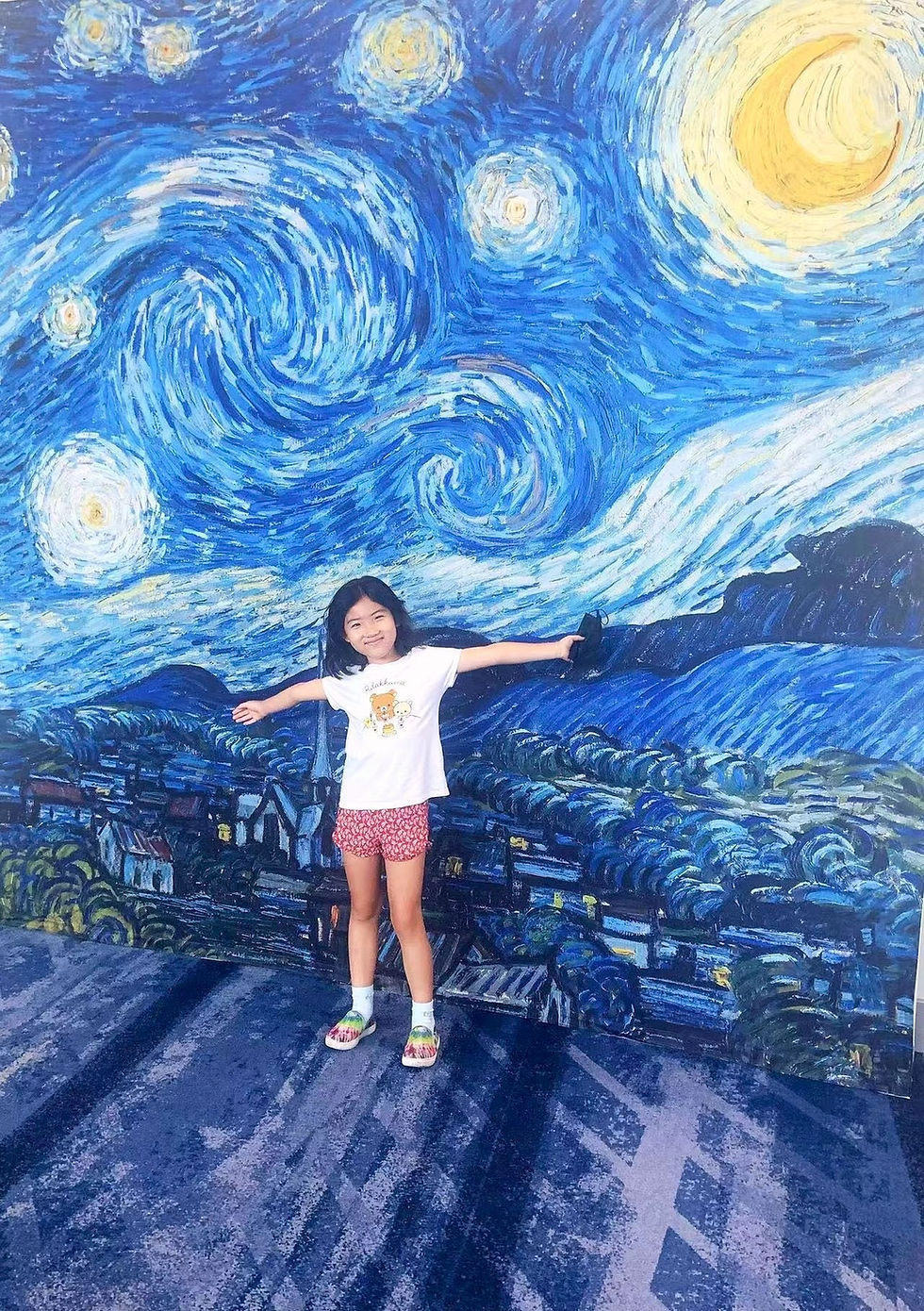
When students engage with such masterpieces, they gain far more than simple technical imitation; they acquire a high-level aesthetic perspective. They begin to ponder: Why are the stars depicted so large? Why does the night sky flow like a river? These very questions mark the germination of artistic literacy.

The most delightful moment arrives after absorbing the nourishment of the classics—when children pick up their brushes and begin to tell their own stories.

The assignment was to “Draw Your Own Starry Night”. Everyone came up with such fun and creative ideas----each artwork really shows the students’ unique personalities!


This encapsulates the beauty of art education: it's not merely about learning from the classics, but about finding one's own mode of expression through them.


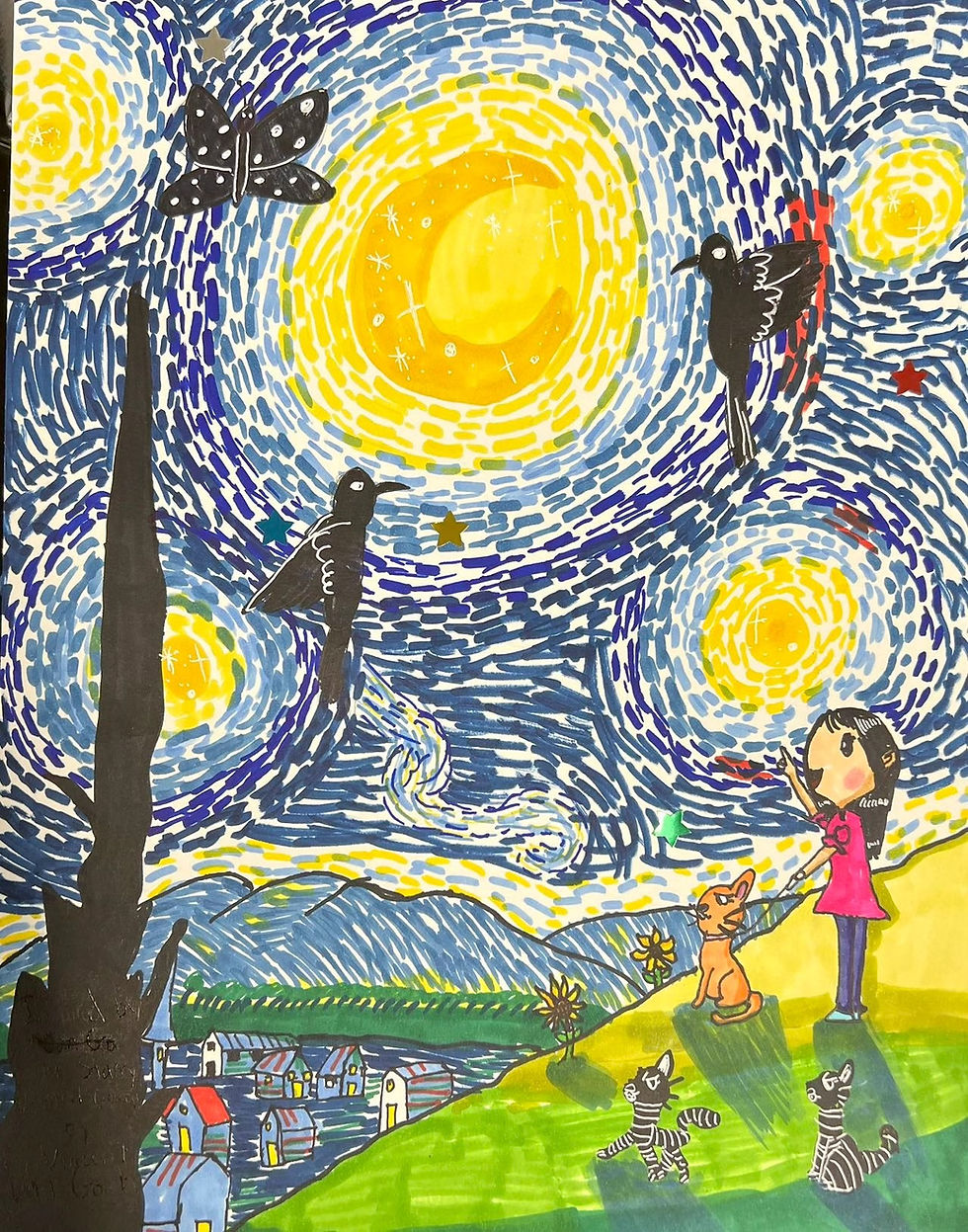

In art instruction, appreciating masterpieces transcends simply viewing a picture; it's a dialogue across time, a sowing of seeds in the soul. Those classics, which shine ever brighter through the sifting of time, are the crystallization of human aesthetic wisdom and the most reliable artistic guides for our students.


In these creations, we can perceive van Gogh's inspiration—the bold brushwork, the unique focus on the nocturnal atmosphere. But more prominently, we witness each child's unique inner world—their memories, imaginations, and emotions.
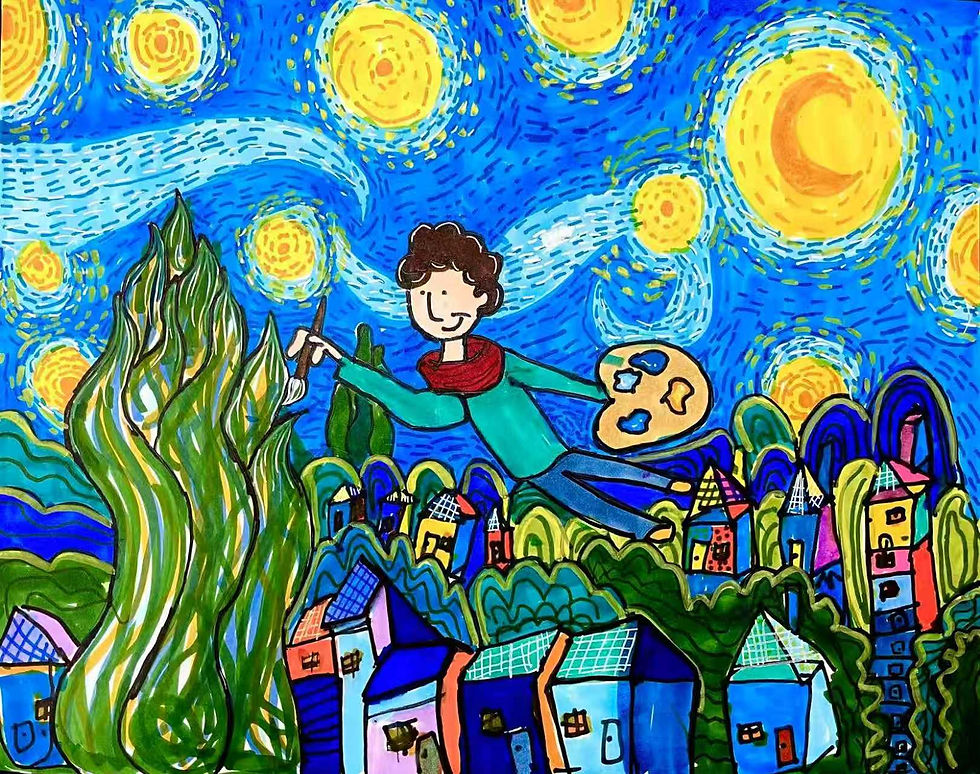

This is the most touching aspect of art education: it is not a process of replicating classics, but a journey where the classics serve as a spark, igniting each child's unique creativity. From appreciating the master's starry night to creating their own, children undergo a wonderful artistic transformation—they learn not only to "see," but also to "express."


As children proudly hold up their work and share stories about "My Starry Night," they come to understand that art is not an inaccessible model, but a means of dialogue with the world that everyone can possess. This, indeed, is the most precious gift the classics bestow upon us.



Comments